Forgekeeper's Spark
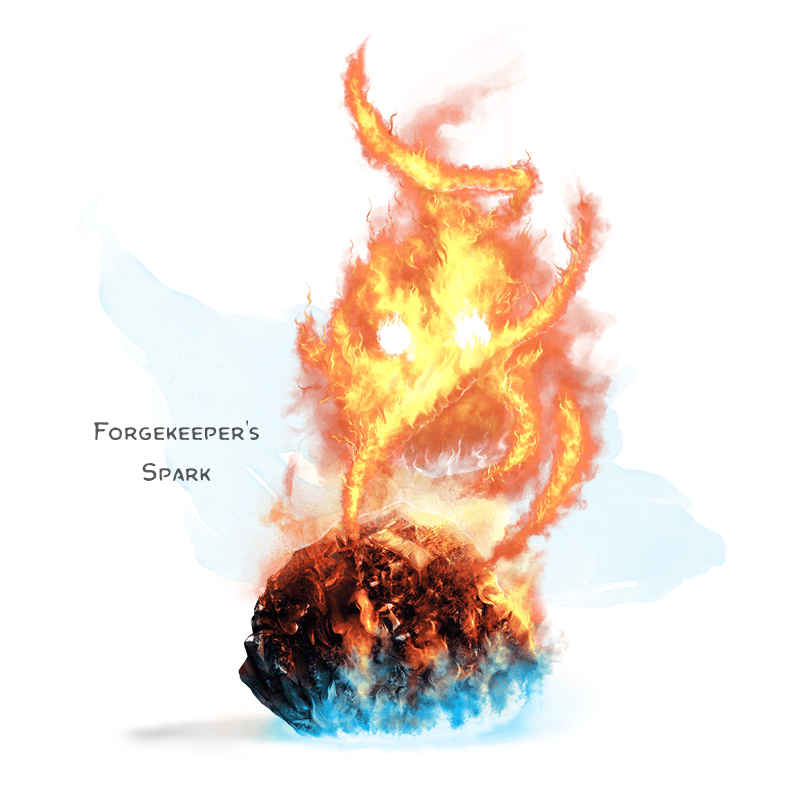
A lingering fragment of a fire spirit remains attached to this piece of coal, keeping it covered in harmless blue embers that are pleasantly warm to the touch. When surrounded by fire, the coal burns with a magical blue flame and the spirit within it emerges. The spirit remains until the fire goes out or is doused, at which point the spirit hides within its coal until immersed in flames once more. If removed from the fire, the spirit moves with the burning coal and remains for up to 1 minute.
While the spirit is present, it helps tend to the fire it's placed in. The spirit can maintain a fire that fills up to a 5-foot cube. A fire tended to by the spirit gains the following benefits:
It can't be extinguished by strong winds.
It produces no smoke, unless you want it to.
It burns for twice the normal duration with the same amount of fuel.
Any food being cooked in the fire is kept at an ideal temperature.
In addition, you have advantage on any ability check you make that uses either cook's utensils or glassblower's, smith's, or tinker's tools to heat and craft items in the fire. If you roll a 15 or higher on the d20, the time it takes to use the tools in this way is halved.
Sentience. The forgekeeper's spark is a sentient lawful neutral item with an Intelligence of 1, a Wisdom of 6, and a Charisma of 1. It is immune to fire damage and has hearing and darkvision out to a range of 60 feet. It can't speak or read, but understands Common and Ignan.
Personality. The forgekeeper's spark is happiest in the fires of a forge, but also enjoys maintaining campfires. It is strict with the boundaries of its fire, preventing it from spreading uncontrollably, and is resourceful with how it manages any fuel that it's given. It enjoys assisting with tasks, such as cooking and metalworking, and snaps and pops with excited sparks when given something new to heat up.
The sound of song clattered through the smithy, its tempo and percussion kept by the beating of a hammer against anvil. Most visitors would come and go, thinking the behavior simply charming and good-natured, but the clever ones who looked closely would notice, after a time, that the smith was singing to the fire. His wobbling notes and timed beats created a chorus for he and the spirit within the flames to work and dance to. The smith wasn't singing idly, no: he was serenading his coworker, friend, and muse.